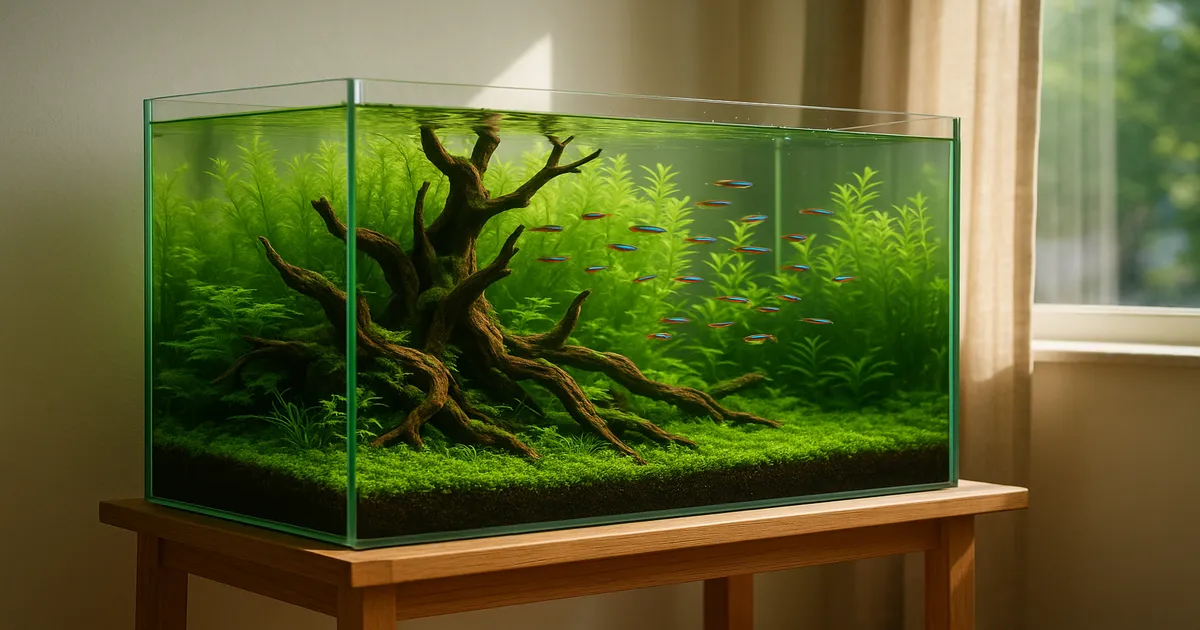
Quick Answer: Almost any location can support some form of planted aquarium — but the style and complexity of the setup must match the real constraints of that space. Lighting, temperature stability, structural load, and water access are the four factors that determine what’s actually possible where you are.
Is It Realistically Possible to Have a Nice Planted Tank at Your Location?
The short answer is yes — with the right approach. Whether you’re eyeing a basement corner, an office desk, or a living room wall, whether it’s realistically possible to have a nice planted tank at that location comes down to how well you can control four things: light, temperature, weight, and water access.
A planted tank doesn’t need a perfect environment — it needs a stable one. Dramatic temperature swings, uncontrolled sunlight, and floors that can’t bear the load will cause problems that no amount of careful plant selection can fix. Get those fundamentals right, and the rest is manageable.
Low-Tech vs. High-Tech: Match the Setup to the Space
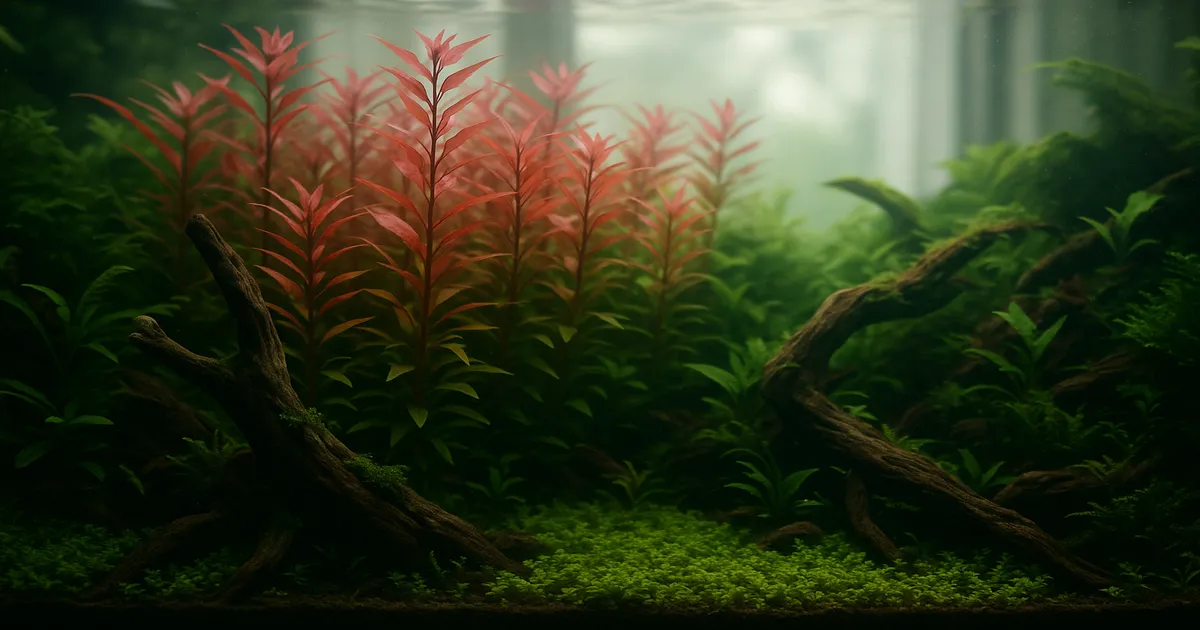
Think of planted tanks on a spectrum. At one end, a low-tech setup — slow-growing plants, moderate light, no CO₂ injection — is forgiving, affordable, and works in a wide range of locations. At the other end, a high-tech Nature Aquarium with pressurized CO₂, high-output LEDs, and carpet plants demands tightly controlled conditions. Most location challenges are solved simply by choosing the right tier for your space.
The Four Factors That Determine Whether Your Location Will Work
Natural Light vs. Artificial Light: Why Windowsills Are Tricky
Direct sunlight sounds like a free light source, but it’s one of the worst things for a planted tank. Intensity is completely uncontrollable — it shifts with seasons, cloud cover, and time of day. A few hours of direct sun can spike water temperature by several degrees and trigger explosive algae growth. A quality LED fixture on a timer gives you precise, repeatable light that a window simply cannot.
Position your tank at least 3–4 feet from any window that receives direct sun. Indirect ambient light won’t power plant growth, so plan on artificial lighting regardless of your location.
Temperature Stability: Avoiding Dangerous Swings
Most tropical planted tanks thrive at 72–82°F (22–28°C), but the exact number matters less than keeping it consistent. A swing of more than 4°F (2°C) within a single day stresses both plants and fish.
Garages, sunrooms, and uninsulated basements are the most challenging spots — they often swing 10–20°F between day and night, which no heater can fully compensate for. Climate-controlled rooms such as bedrooms, offices, and living rooms are almost always better choices.
Floor and Furniture Load-Bearing Capacity
Water weighs approximately 8.34 lbs per gallon. A 40-gallon tank, once you add substrate, hardscape, equipment, and the glass itself, can easily exceed 400–450 lbs. Before setting up anything larger than a 20-gallon, verify that your floor joists and any furniture can handle the weight. Place large tanks against a load-bearing wall when possible, and always use a purpose-built aquarium stand — not a bookshelf or dresser.
Access to Water and Drainage
Weekly water changes of 25–50% are non-negotiable in a planted tank. If your location is far from a sink or outdoor hose, that chore becomes significantly harder — and when maintenance is hard, it gets skipped. A Python-style water changer can extend your practical range considerably, but you’re still limited by hose length. Factor this in before committing to a spot.
Water Parameters Every Planted Tank Location Must Meet
Test Your Tap Water Before You Buy Anything
This is the most important pre-purchase step most beginners skip. You need to know:
- pH: Ideal range is slightly acidic to neutral (6.5–7.5). Above 7.8, iron and micronutrients become unavailable to plants.
- General Hardness (GH): Aim for 3–12 dGH. Calcium and magnesium are essential plant nutrients — very soft water needs mineral supplementation.
- Carbonate Hardness (KH): Target 3–8 dKH. KH buffers against pH swings, which is especially critical if you’re injecting CO₂.
A liquid test kit covers all of these and is far more accurate than test strips.
Temperature, Nutrients, and CO₂
Most planted setups run at 76–80°F (24–27°C) — a sweet spot for tropical plants and common fish like Cardinal Tetras and Ember Tetras. Cooler setups (64–72°F / 18–22°C) suit temperate plants like Vallisneria and Egeria densa, but you’ll need to match your fish selection accordingly.
Unlike fish-only tanks, planted tanks need nutrients in the water. Target nitrate at 5–30 ppm and phosphate at 0.5–2.0 ppm. If you’re running a high-tech setup, aim for CO₂ at 20–35 ppm — a drop checker should display lime green at the correct level. Below 5 ppm nitrate, plants yellow and stall. Above 50 ppm, algae wins.
Adjusting Problem Tap Water
Hard, alkaline tap water is the most common mismatch. Your options:
- RO/DI blending — mix reverse-osmosis water with tap water to dilute hardness
- Peat filtration — adds tannins that soften and acidify water naturally
- Remineralizing soft water — add a GH booster (Seachem Equilibrium) to raise calcium and magnesium in RO water
Parameter stability matters more than hitting exact numbers. A tank that holds steady at pH 7.2 will always outperform one that swings between 6.8 and 7.6.
Choosing the Right Tank Size and Setup for Your Space
Nano Tanks for Desks and Small Shelves (5–10 Gallons)
A 5–10 gallon nano is a legitimate planted tank, not a compromise. It fits on a desk or shelf, costs less to set up, and can look stunning with the right plants. The trade-off is that small water volumes are less forgiving — temperature and chemistry shift faster, and mistakes compound quickly. Stick to low-tech plants and keep stocking light.
Standard Planted Tanks for Living Rooms and Offices (20–75 Gallons)
The 20–40 gallon range is the sweet spot for most beginners. Water chemistry is more stable, you have room for a real aquascape, and you can keep interesting groups of fish. Tanks in the 40–75 gallon range offer the most design flexibility and are genuinely more beginner-friendly despite their size — more water volume means slower, more manageable problems.
Substrate, Filtration, and CO₂
Substrate locks in your plant options more than almost any other decision:
- Aquasoil (ADA Amazonia , Fluval Stratum): Nutrient-rich, slightly acidic, excellent for demanding plants. Lasts 2–5 years.
- Capped substrate: Inert sand or gravel over a nutrient base layer with root tabs — a solid budget option.
- Plain inert gravel with root tabs: Fine for low-tech setups with Anubias, Java Fern, and Crypts.
Use at least 2–3 inches of depth, and 3–4 inches for deep-rooting plants like Amazon Swords. Avoid calcium-rich substrates like crushed coral — they’ll push pH and KH in the wrong direction.
Filtration: Canister filters (Fluval 307) are the preferred choice for planted tanks. They provide excellent biological filtration with minimal surface agitation, which preserves dissolved CO₂. HOB filters work but increase surface turbulence, off-gassing CO₂ faster — a real problem in high-tech setups. Sponge filters are perfectly fine for low-tech, lightly stocked tanks and are ideal for shrimp.
CO₂: Low-tech tanks with appropriate plant selection genuinely don’t need CO₂ injection to look great. If you’re keeping Anubias, Java Fern, and Crypts, skip the CO₂ and invest in better lighting instead. For medium and high-tech setups, a pressurized CO₂ system with a regulator, cylinder, and diffuser is the most reliable option. Liquid carbon (Seachem Excel) is a useful supplement with mild algae-control properties, but it’s not a true replacement for pressurized CO₂.
Lighting: The Make-or-Break Factor for Any Location
How Much Light Do Planted Tank Plants Actually Need?
PAR (Photosynthetically Active Radiation, measured in µmol/m²/s) tells you how much usable light reaches your plants:
| Setup Type | PAR at Substrate | Example Plants |
|---|---|---|
| Low-tech | 20–50 µmol/m²/s | Anubias, Java Fern, Crypts, Mosses |
| Medium-tech | 50–100 µmol/m²/s | Vallisneria, Rotala, Ludwigia |
| High-tech | 100–200+ µmol/m²/s | HC Cuba, Glossostigma, Hairgrass carpets |
More light isn’t better — it just demands more CO₂ and nutrients to match. Under-lit plants stall; over-lit tanks without CO₂ grow algae.
Recommended fixtures include the Fluval Plant 3.0 , Chihiros WRGB II, Twinstar 600E, and ONF Flat Nano Plus. All offer programmable intensity and spectrum control, making it straightforward to dial in the right PAR for your setup.
Run your lights for 8–10 hours per day on a timer — no exceptions. A tank that gets 14 hours of light one day and 6 the next will develop algae problems that feel mysterious but are entirely predictable. And to answer a common question directly: no, a window cannot serve as your primary light source. Natural light is uncontrollable, seasonally variable, and almost always promotes algae faster than plants can consume nutrients.
Best Plants and Fish for Location-Challenged Setups
Easy Plants for Low-Light, Low-Tech Conditions
These tolerate low PAR, don’t require CO₂, and forgive irregular fertilizing:
- Anubias barteri — attach to driftwood or rock; never bury the rhizome
- Java Fern (Microsorum pteropus) — same attachment rule as Anubias
- Cryptocoryne wendtii — excellent mid-ground plant, tolerates a wide range of conditions
- Java Moss — versatile, great for shrimp tanks
- Vallisneria spiralis — fast-growing background plant, thrives in harder water
Medium and High-Demand Plants
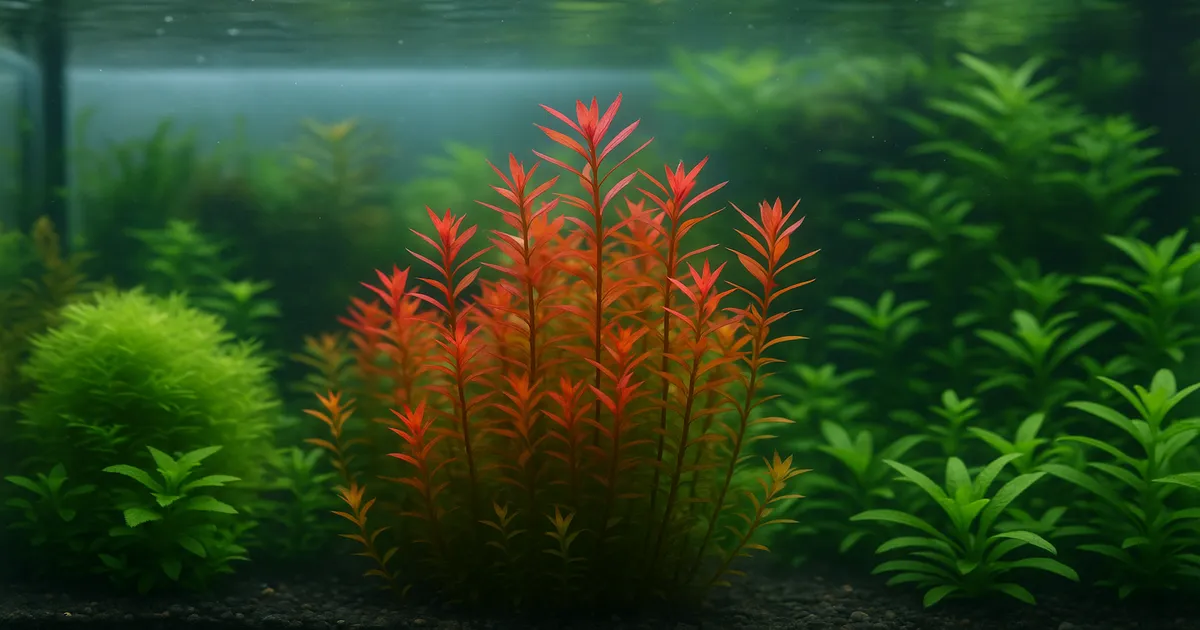
With reliable lighting, CO₂, and consistent fertilizing, you can move up to Rotala rotundifolia, Ludwigia repens, and Dwarf Hairgrass (Eleocharis acicularis). True high-tech plants — HC Cuba, Glossostigma elatinoides, Monte Carlo (Micranthemum tweediei) — require 100+ µmol/m²/s PAR, stable CO₂, and active nutrient management. They’re rewarding but unforgiving.
Ideal Fish and Invertebrates
Small schooling fish are the best companions for planted tanks. They add movement and color without disturbing plants or substrate:
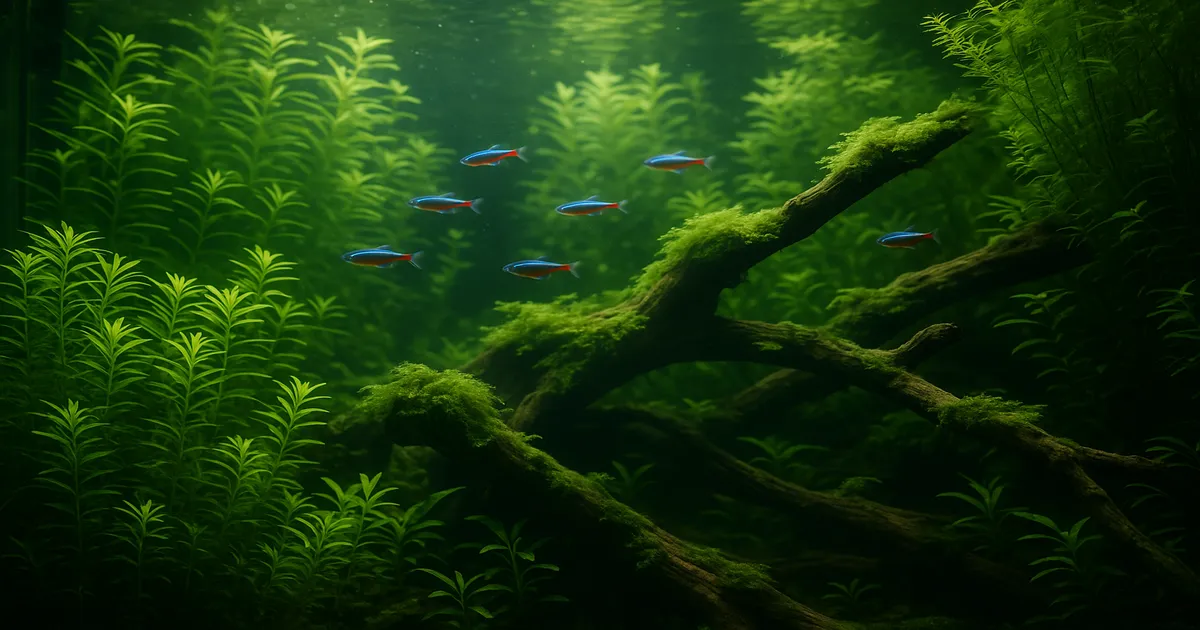
- Cardinal Tetras — classic choice, stunning under planted tank lighting
- Ember Tetras — tiny, warm-colored, peaceful
- Celestial Pearl Danios — jewel-like micro fish for nano setups
- Chili Rasboras — excellent for small tanks, pairs beautifully with mosses
- Amano Shrimp — the gold standard algae eater
- Neocaridina shrimp (Cherry, Blue Velvet) — hardy, colorful, easy to breed
- Nerite Snails — excellent glass and leaf cleaners, won’t overpopulate
Keep schooling fish in groups of at least 6 — ideally 10 or more. Undersized groups produce stressed, washed-out fish.
Species to Avoid
- Goldfish: Uproot everything, produce enormous waste, prefer cooler water
- Common Plecos: Bulldoze plants and create a massive bioload
- Buenos Aires Tetras: Will eat your plants systematically
- Most cichlids: Diggers by nature; small Apistogramma are an exception in well-established tanks
- Crayfish: Will dismantle every plant in the tank, without exception
Fertilizing and Common Problems
What Plants Need and How to Deliver It
Plants need nitrogen, phosphorus, and potassium — plus micronutrients like iron, manganese, and boron. Fish waste supplies some nitrogen, but rarely enough on its own, and micronutrients must be added directly.
Water-column feeders like Rotala and stem plants benefit from liquid fertilizers (NilocG Thrive). Heavy root feeders — Amazon Swords, Crypts, Vallisneria — respond well to root tabs placed near the base every 3–6 months.
For dosing strategy: low-tech tanks do well with a weekly all-in-one liquid fertilizer dose. High-tech tanks benefit from Estimative Index (EI) dosing — generous macro and micro doses with weekly 50% water changes to reset the nutrient baseline. PPS-Pro uses smaller daily doses matched to plant uptake and requires less frequent water changes, but demands more attention to individual nutrient levels. For most hobbyists, EI is the practical starting point.
Feed fish once or twice daily, offering only what they consume in 2–3 minutes. Uneaten food decomposes, spikes ammonia, and drives algae — overfeeding is the single most common beginner mistake.
Algae: Reading the Symptoms
Algae is a symptom, not a disease. Each type points to a specific imbalance:
- Green Spot Algae (GSA): Hard green dots on glass. Cause: low phosphate or inconsistent CO₂. Fix: raise phosphate to 1–2 ppm; scrape with a razor blade.
- Black Beard Algae (BBA): Dark tufts on plant edges and hardscape. Cause: CO₂ fluctuations. Fix: stabilize CO₂; spot-treat with hydrogen peroxide (3%) via syringe.
- Green Water: Pea-soup opacity from free-floating algae. Fix: 3–5 day blackout; reduce photoperiod; UV sterilizer if it persists.
- Staghorn Algae: Gray, branching filaments. Cause: low CO₂ combined with high flow. Fix: increase CO₂, reduce flow, spot-treat.
- Cyanobacteria: Slimy blue-green or red mats with a foul smell — technically a bacterium. Cause: low nitrates and poor circulation. Fix: improve flow, raise nitrates, manual removal; Erythromycin as a last resort.
Nutrient Deficiency Quick Reference
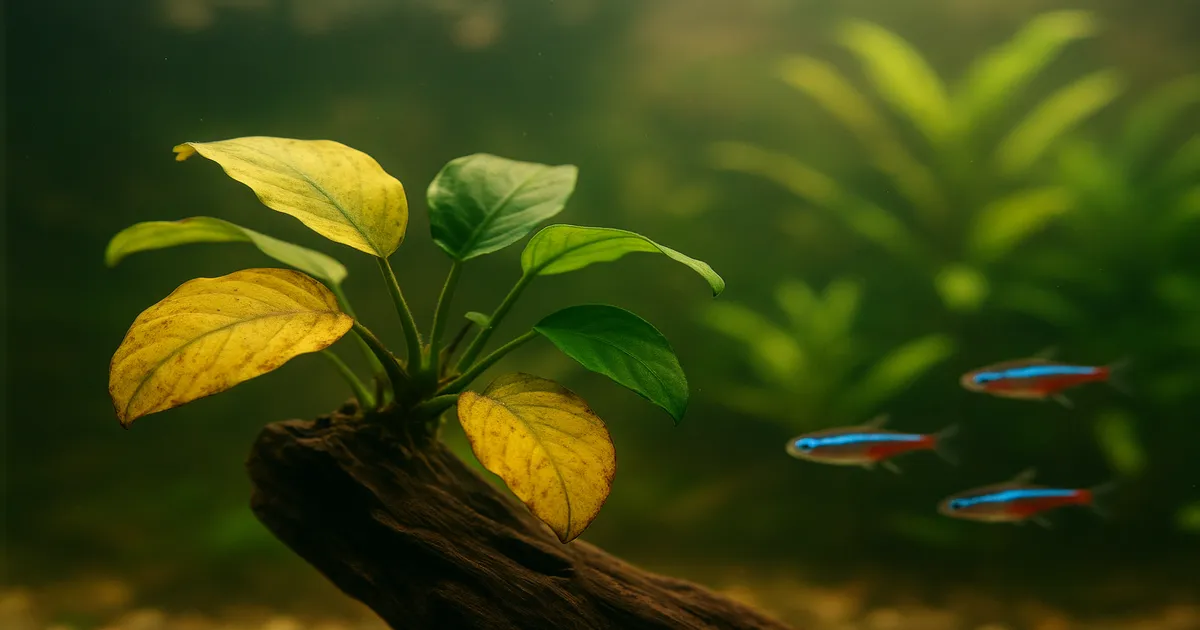
- Yellowing older leaves: Nitrogen or iron deficiency — dose an all-in-one fertilizer and check iron levels
- Purple-tinged leaves: Phosphate deficiency — raise phosphate dosing
- Holes in leaves: Potassium deficiency — add a dedicated potassium supplement
- Stunted new growth: Often CO₂ or micronutrient related — check CO₂ levels first, then review your fertilizer regimen
Is It Realistically Possible to Have a Nice Planted Tank? Frequently Asked Questions
Can I set up a planted tank in a room with no windows? Yes — and in some ways it’s easier. You have complete control over the light cycle with no interference from natural light. A quality LED fixture on a timer is all you need.
How much does a basic planted tank cost to set up? A low-tech 20-gallon setup — tank, stand, light, filter, substrate, and starter plants — typically runs $150–$300. High-tech setups with CO₂ and premium lighting can reach $500–$1,000 or more for the same tank size.
Can I have a planted tank in a rental apartment? Yes, with some caveats. Stick to tanks 40 gallons or under to minimize floor load concerns. Use a drip tray under the stand, keep a towel nearby during water changes, and check your lease — some landlords restrict aquariums above a certain size.
How long does it take for a planted tank to look good? Most low-tech tanks reach a presentable state within 4–8 weeks as plants establish and begin growing. High-tech setups with fast-growing stem plants can look impressive within 2–3 weeks, but require more active management during that period.
What’s the easiest planted tank to maintain long-term? A low-tech 20–40 gallon tank with a nutrient-rich substrate, a single all-in-one liquid fertilizer, and a mix of Anubias, Crypts, and Java Fern. No CO₂, minimal trimming, and weekly partial water changes are all it takes to keep it looking good for years.