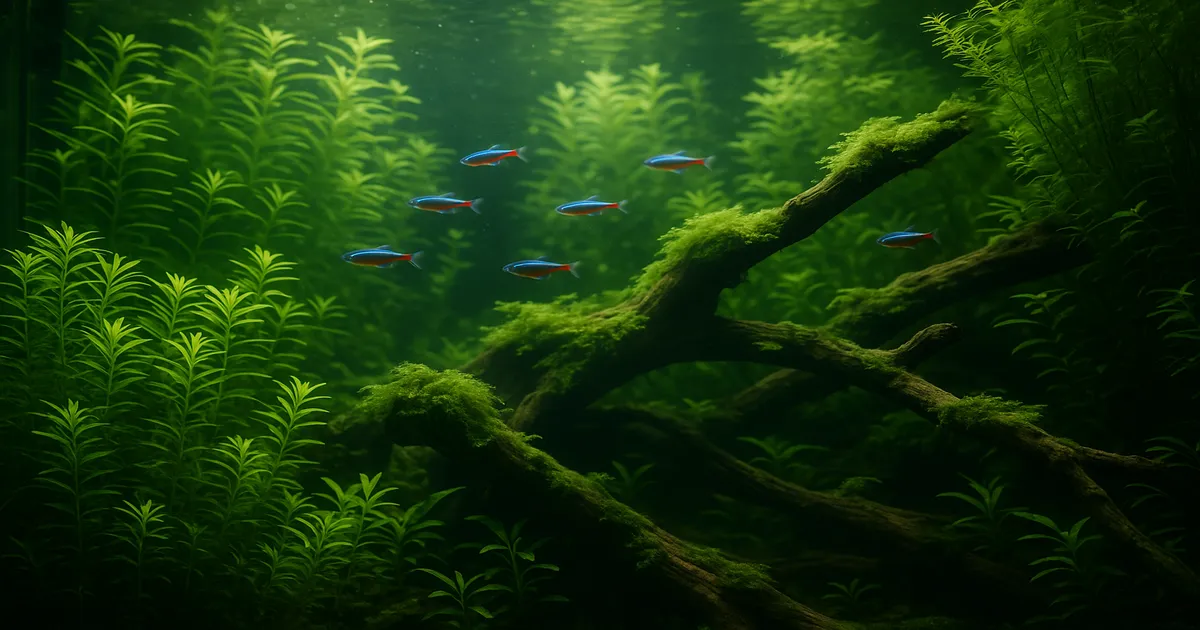
Quick Answer: A planted tank is worth anywhere from $50–$300 for a nano setup to $500–$5,000+ for a large, mature aquascape. But the real price driver isn’t the hardware — it’s the health of the living ecosystem. To price and sell a planted tank successfully, document your water parameters, disclose livestock health honestly, and present the tank as the turnkey biological system it is.
Figuring out how to price and sell a planted tank is genuinely tricky, and most generic advice misses the point. Unlike selling a used TV or even a standard fish tank, you’re selling something alive — a system where substrate, plants, bacteria, and livestock are all interdependent. Get that ecosystem right, document it properly, and you can command a serious premium. Get it wrong, and even expensive equipment won’t save your listing.
This guide covers every factor that moves the price up or down, from water chemistry to livestock compatibility to where you actually post the ad.
How Much Is a Planted Tank Worth? Pricing Ranges by Size
Here’s a rough framework to start with:
- Nano tanks (1–10 gal): $50–$300+
- Standard tanks (20–55 gal): $200–$1,500+
- Large tanks (75–125 gal): $500–$5,000+
- Show tanks (150+ gal): $2,000–$20,000+ (extremely niche buyer pool)
These ranges are wide because the living components vary enormously in quality and rarity. A 40-gallon breeder with a thriving Crystal Red Shrimp colony, ADA Aqua Soil, and an Eheim canister filter is a completely different product from a 40-gallon with plastic decorations and a betta.
Standard tanks are easy to value: add up the hardware, apply a used-goods discount, and you’re done. Planted tanks don’t work that way. The plants, substrate bacteria, and livestock interact as a system, and that system’s value depends entirely on whether it’s healthy and stable. A mature, thriving aquascape is worth far more than the sum of its parts. A crashing one is worth less.
What You’re Actually Selling: Understanding Planted Tank Value
When a buyer purchases your planted tank, they’re not just buying glass, lights, and a filter. They’re buying a functioning nitrogen cycle, established root systems, and a balanced community of organisms. The moment that ecosystem breaks down, the value collapses with it.
How Aquascape Style Affects Your Pricing Tier
Different styles attract very different buyers, and your pricing should reflect that.
| Style | Market Appeal |
|---|---|
| Dutch | High-end collectors; commands a premium for dense, manicured stem plant arrangements |
| Nature Aquarium / Iwagumi | Aesthetic buyers and photographers; minimalist hardscape with carpet plants |
| Jungle Style | Broadest hobbyist market; naturalistic, lower-maintenance appeal |
| Biotope | Specialist buyers who want species-accurate regional setups |
| Nano Planted | Beginners and apartment dwellers; easiest to transport and sell |
| Paludarium / Riparium | Niche market, but premium pricing when done well |
Knowing your style helps you target the right buyer and write a listing that speaks their language.
Mature vs. Newly Planted Tanks: Why Age Commands a Premium
A tank running for 6–18+ months is a fundamentally different product from one planted last month. Established root systems, proven parameter stability, and a dense bacterial colony in the substrate and filter media all take time to develop. Buyers who understand the hobby will pay meaningfully more for them. If your tank is young, be honest about it — experienced buyers will know anyway.
How to Value Every Component: The Planted Tank Pricing Checklist
Substrate: A Major and Often Overlooked Value Driver
Substrate is one of the most underappreciated value factors in a planted tank listing. Here’s how the main types stack up:
- ADA Aqua Soil (Amazonia, etc.): High value — premium brand, actively buffers pH, promotes plant growth
- Controsoil / Fluval Stratum: Medium-high value
- Inert gravel with root tabs: Medium
- Plain sand or gravel: Low
One critical disclosure: active substrates exhaust their pH-buffering capacity in roughly 12–18 months. Always tell buyers how old the substrate is. Hiding this is a fast way to burn your reputation in the hobby community.
Hardscape, Filtration, Lighting, and CO₂
Good hardscape has real monetary value on its own. Seiryu stone runs $5–$15/lb retail; Spider Wood and Manzanita pieces sell for $10–$80+ depending on size and shape. A photogenic, well-composed layout is often the single biggest factor in whether your listing gets attention online.
A canister filter that has been running for a year and is colonized with beneficial bacteria is genuinely more valuable than a brand-new one out of the box. (Eheim Classic 2217) Make that point explicitly in your listing — many buyers don’t realize it, but the ones who do will trust you more for saying it. HOB filters (AquaClear, Seachem Tidal) retain decent resale value when well-maintained.
High-end planted lights hold their value well. Brands like Fluval, Chihiros, ONF, and Twinstar sell new for $80–$400+ and command strong resale. Budget lights (Nicrew, Hygger) are worth considerably less. A complete pressurized CO₂ system — regulator, cylinder, diffuser, and drop checker — adds $100–$400+ to your asking price and is a major draw for serious buyers.
High-Value Plants and Livestock
Not all plants are equal. Rare Bucephalandra varieties, unusual Anubias cultivars (“Pangolino,” “Pinto”), rare Cryptocoryne species, and specialty tissue-cultured mosses all command real money. On the livestock side, Crystal Red/Black Shrimp, Celestial Pearl Danios, Scarlet Badis, wild-type Discus, and rare Corydoras species deserve a prominent mention in any listing. If your tank has them, lead with them.
Water Parameters: The Biological Proof That Justifies Your Price
Why Testing Before You List Is Non-Negotiable
Water parameters are the single most important factor in justifying your asking price. They’re not just numbers — they’re proof that the ecosystem is functioning. Test everything before you write one word of your listing.
Target Parameters by Tank Type
- Community planted tanks: pH 6.5–7.4, GH 4–8 dGH, KH 2–5 dKH, temperature 74–80°F (23–27°C)
- Caridina shrimp tanks (CRS/CBS): pH 5.8–6.8, GH 4–6 dGH, KH 0–2 dKH, temperature 68–74°F (20–23°C) — commands a premium due to difficulty
- Neocaridina shrimp tanks: pH 7.0–7.6, GH 6–10 dGH, KH 2–5 dKH, temperature 68–76°F (20–24°C)
- Discus planted tanks: pH 6.0–7.0, GH 3–8 dGH, temperature 82–86°F (28–30°C) — premium niche, smaller buyer pool
One thing buyers sometimes misread: low KH in a CO₂-injected tank is intentional, not a problem. Explain this proactively to prevent unnecessary price objections.
Ammonia, Nitrite, and Nitrate: The Pass/Fail Test
Any detectable ammonia or nitrite means the tank is unstable — do not list it until both read 0 ppm. Nitrate tells a different story. A heavily planted tank reading under 5–10 ppm nitrate is powerful evidence of a functional, plant-driven nitrogen cycle. That’s a selling point, not just a data point.
Photograph your test results next to the tank, including the date. Add a TDS meter reading for shrimp tanks. It takes two minutes and dramatically increases buyer confidence.
Livestock Compatibility and Health Disclosure
Compatible Communities Add Value; Incompatible Ones Kill Deals
A well-matched, thriving community adds substantial value over an empty planted tank. An incompatible or chaotic mix does the opposite — it raises red flags and invites lowball offers. Large cichlids that uproot plants, goldfish in a tropical setup, aggressive fin-nippers with long-finned fish — these pairings signal poor planning to experienced buyers.
Keep all schooling species at 6+ individuals before listing. Selling a tank with a “school” of three tetras is both a welfare issue and a credibility issue. Experienced buyers will notice immediately.
Breeding Activity as a Value Multiplier
Active breeding is one of the strongest value signals you can offer. It simultaneously proves water quality, livestock health, and tank stability in a way that no test result alone can. A tank with visibly berried shrimp females or juvenile fry present can command a 20–50% premium over a comparable non-breeding setup. A bonded, proven Apistogramma pair is worth meaningfully more than two unrelated fish of the same species. Mention these details explicitly.
Health Disclosure: What to Fix Before You List
The planted tank hobby is a community. Selling a tank with active disease or concealed problems will follow you — on forums, in local clubs, and in Facebook groups.
Common issues to resolve before listing:
- Ich: White salt-like spots, flashing, lethargy. Treat with a temperature raise to 82–86°F plus a malachite green-based medication. (Hikari Ich-X)
- Velvet: Gold/rust dust on the body, rapid gill movement. Copper-based treatments work but are lethal to invertebrates — remove shrimp and snails before treating.
- Fin rot / Columnaris: Ragged fins, white patches. Treat with Kanaplex or Furan-2 and address the root cause (usually water quality).
- Shrimp failed molts: Caused by low GH — supplement with a mineral additive before listing.
- Milky/bacterial shrimp or Ellobiopsidae (green fungus): Discard or quarantine affected individuals. Never sell shrimp showing these symptoms.
Heavy Black Beard Algae or a cyanobacteria outbreak signals underlying problems — CO₂ fluctuation, poor flow, or nutrient imbalance — and will either kill the deal or force a significant price reduction. Don’t list until it’s resolved.
Wait at least four weeks after any disease treatment before listing. Some diseases recycle if you cut the clearance period short.
How to Price and Sell a Planted Tank: Platforms, Listings, and Handover
Where to Sell
For anything 75 gallons and up, local sale is your only realistic option. Smaller tanks open up online channels, though livestock shipping adds complexity.
- Facebook Marketplace and local aquarium clubs — ideal for large setups and buyers who want to see the tank running
- r/AquaSwap — active, knowledgeable community; good for plants, livestock, and smaller complete setups
- Facebook groups — “Planted Tank Buy/Sell/Trade,” local society groups, and species-specific groups (shrimp groups for shrimp tanks)
- The Planted Tank forum classifieds — reaches a dedicated planted tank audience
- Aquabid — better for rare livestock and plants than complete tanks
Writing a Listing That Attracts Serious Buyers
Lead with the details that matter most to experienced buyers:
- Aquascape style and tank age
- Water parameters with a photo of test results
- Full equipment list with brand names and ages
- Complete livestock inventory with quantities
- Substrate type and age
- Asking price and whether you’ll negotiate
Let the photos do heavy lifting. Shoot the tank from the front with good lighting, and include close-ups of standout plants and livestock. A striking layout photographed well is often the difference between a listing that sells in a day and one that sits for weeks.
Starting 10–20% above your target price gives you negotiation room. Most buyers will ask for some discount; that buffer lets you give a little while still hitting your number. If you’d rather skip the back-and-forth, “firm” pricing works well on r/AquaSwap — just expect a slightly longer sale timeline.
Safe Handover Tips
- Bag fish using pure oxygen if possible; double-bag for longer transports
- Transport shrimp in bags or sealed containers with tank water
- Drain the tank to 25–30% capacity for moving — just enough to keep substrate wet and plants covered
- Keep filter media submerged in tank water the entire time to protect beneficial bacteria
- Wrap hardscape separately to prevent it shifting and cracking the glass
- Ask the buyer to bring buckets and a battery-powered air pump for livestock holding
Frequently Asked Questions About Pricing and Selling Planted Tanks
How much should I sell my planted tank for?
Price based on tank size, equipment quality, livestock value, and — most importantly — the health and age of the ecosystem. Nano setups typically sell for $50–$300, standard tanks for $200–$1,500, and large aquascapes for $500–$5,000+. A mature, stable tank with rare plants or livestock can exceed these ranges significantly.
What adds the most value to a planted aquarium?
Tank age and biological stability are the biggest value drivers, followed by rare or high-value livestock (Crystal Red Shrimp, Discus, rare Corydoras), premium substrate and filtration, and a well-composed hardscape. Active breeding activity can add a further 20–50% premium.
Should I sell the fish and plants separately or as a complete setup?
Selling as a complete setup almost always nets you more money. Buyers pay a premium for a turnkey system they don’t have to assemble themselves. Splitting the tank means losing that premium and dealing with multiple transactions. The exception is if you have particularly rare or valuable livestock that would sell for more to a specialist buyer.
How do I prove my tank is healthy to a potential buyer?
Photograph your water test results (API Master Test Kit or equivalent) next to the tank with the date visible. For shrimp tanks, include a TDS reading. Offer to test the water again at pickup. Showing breeding activity, stable parameters over time, and a clean disease history are the most convincing signals you can give.
Is it worth selling a planted tank locally or shipping it?
For tanks under 40 gallons, both options are viable — though shipping livestock adds cost and risk. For anything larger, local sale is the only practical choice. Large tanks cannot be safely shipped, and even local moves require careful planning. Focus your listing on local platforms first, and only consider shipping individual plants or livestock separately if the tank doesn’t sell.