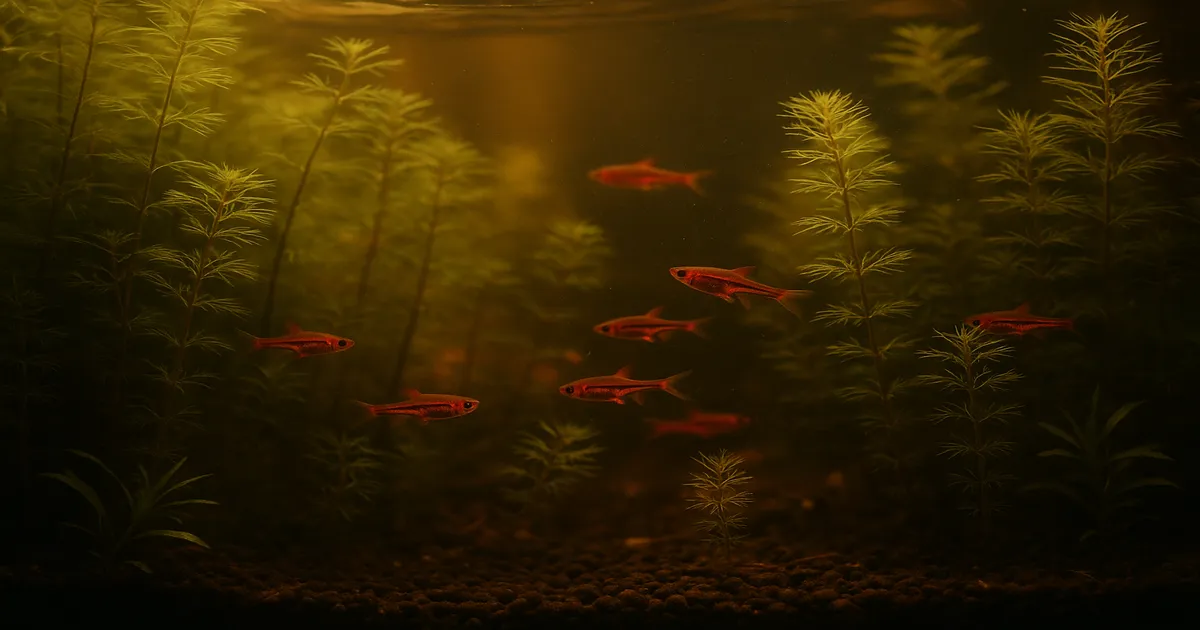
Quick Answer: Yes, 8 chili rasbora fit very comfortably in a 16-gallon tank — that’s considered lightly stocked. A well-planted, well-filtered 16-gallon can support 15–20 chili rasbora as a species-only setup. A larger school will display bolder coloration and far more natural behavior than a group of 8.
If you’re asking whether you can fit 8 chili rasbora in a 16-gallon tank, the short answer is yes — easily. But the more interesting question is whether you should stop at 8. This guide covers stocking, setup, water chemistry, feeding, and tank mates so you can build the best possible home for Boraras brigittae.
Can You Keep 8 Chili Rasbora in a 16-Gallon Tank?
Eight chili rasbora in a 16-gallon is perfectly fine. They’re tiny fish with an extremely low bioload, and the tank won’t be anywhere near capacity. You’ll have happy, healthy fish — but you’ll also be leaving a lot of potential on the table.
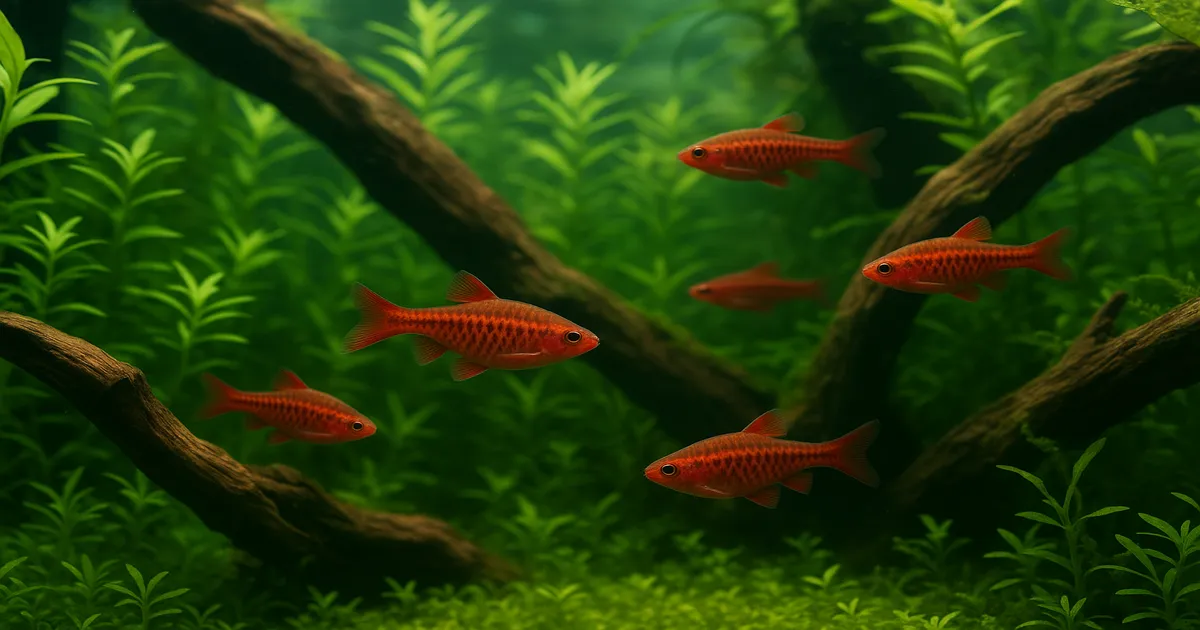
Chili rasbora are schooling fish, and school size directly affects how they look and behave. A group of 8 will spend a fair amount of time tucked near plants. A group of 15 will cruise the tank together in formation, the males flaring their crimson at each other in a constant, low-stakes display. It’s one of the most beautiful sights in the nano aquarium hobby.
A planted, well-filtered 16-gallon can comfortably support 15–20 chili rasbora as a species-only setup, or 10–12 alongside one or two compatible nano species. The old “1 inch per gallon” rule doesn’t apply here — it was designed with larger fish in mind and wildly overstates the impact of a 0.7-inch fish on water quality. Bioload, swimming space, and behavioral needs are what actually matter.
Chili Rasbora: Species Overview
Size, Lifespan, and Why They’re Called Micro Fish
Boraras brigittae tops out at just 0.6–0.8 inches (1.5–2 cm), making them one of the smallest fish in the hobby. Despite that tiny frame, they’re surprisingly long-lived: expect 4–8 years in a well-maintained tank. These aren’t throwaway fish — they deserve proper care and a stable environment.
Natural Habitat: Blackwater Peat Swamps of Borneo
Chili rasbora come from the Melawi River basin in Kalimantan, Indonesia — specifically the shallow, slow-moving blackwater peat swamps of southwestern Borneo. The water there is heavily stained amber-brown from decomposing leaves and peat, extremely soft and acidic, and dimly lit by a dense forest canopy. Understanding this habitat explains almost every care requirement they have.
Telling Males and Females Apart
Males are slim, intensely crimson, and sport a bold black lateral stripe. When they’re in good condition, they almost glow. Females are rounder (especially when carrying eggs), slightly larger, and noticeably less vivid. Washed-out males are usually a water quality or parameter signal worth investigating.
A quick note on lookalikes: Boraras merah (dwarf rasbora) and Boraras maculatus (dwarf spotted rasbora) are sometimes sold under similar names. They’re closely related with nearly identical care requirements, but B. brigittae has the most striking coloration of the group.
Ideal Water Parameters for Chili Rasbora
pH, Hardness, and Why Soft Acidic Water Matters
Chili rasbora thrive in acidic water. The ideal pH range is 5.0–6.5, though many hobbyists keep them successfully up to pH 7.0 with decent results. The commonly cited range of 4.0–6.0 reflects their wild habitat but is difficult to maintain stably in a home aquarium and unnecessary for healthy captive fish. At consistently neutral or alkaline pH, expect reduced coloration, chronic low-level stress, and a shorter lifespan.
Soft water is equally important. Target 1–5 dGH for general hardness and 0–3 dKH for carbonate hardness. High KH buffers pH upward, which actively works against the conditions these fish need.
Temperature
Keep the tank at 75–82°F (24–28°C). Stability matters as much as the number — a sudden drop below 72°F (22°C) can trigger illness quickly in such small fish. A reliable heater with an adjustable thermostat is non-negotiable. The Eheim Jager is a popular and dependable choice for tanks this size.
Ammonia, Nitrite, and Nitrate
Ammonia and nitrite must be at absolute zero. Their tiny body mass means nitrogen-cycle toxins hit them faster and harder than larger fish. Nitrate should stay below 20 ppm; ideally under 10 ppm. Regular water changes and a mature, cycled filter are your best tools.
Tannins and Blackwater Additives
Tannins and humic acids — released by Indian almond leaves, driftwood, and alder cones — aren’t just aesthetic. They naturally lower pH, have mild antibacterial properties, and genuinely improve health, coloration, and breeding behavior. Toss a few Indian almond leaves on the substrate and let them break down naturally. A commercial blackwater extract like Seachem BlackWater can supplement these if you want more consistent results.
Best Water Sources
RO water remineralized to low GH/KH is the gold standard for this species. Seachem Equilibrium is a reliable remineralizer that gives you precise control over hardness. Rainwater collected cleanly can also work in appropriate climates. Most tap water is unsuitable unless you happen to live somewhere with naturally very soft, low-mineral water — always test before use. A quality pH and TDS meter like the Apera Instruments PC60 is worth having given how specific their requirements are.
Setting Up a 16-Gallon Tank for Chili Rasbora
Substrate
Use dark fine sand or black gravel. The contrast makes their red coloration look dramatically more intense, and dark substrates mimic their natural environment, reducing stress. Bright white or coarse substrates have the opposite effect — fish look pale and spend more time hiding. A layer of dried leaf litter (Indian almond, oak, or magnolia leaves) on top adds tannins and provides natural shelter. Caribsea Super Naturals in Torpedo Beach is a popular dark sand option that works well here.
Plants and Aquascaping
Dense planting isn’t optional — it’s essential. Chili rasbora feel exposed and stressed in sparse tanks. Good choices include:
- Java moss and other mosses (Fissidens, Christmas moss) — cover and spawning sites
- Cryptocoryne species — thrive in low light and soft water
- Bucephalandra — perfect for blackwater setups
- Anubias — hardy, low-light, attaches to driftwood or rock
- Floating plants (Salvinia, frogbit, dwarf water lettuce) — diffuse light naturally and provide surface cover
Driftwood — mopani, Malaysian, or spider wood — serves double duty as structure and a natural tannin source. Add seed pods and botanicals if you want a true blackwater biotope feel.
Filtration
These fish come from near-still water. Strong currents exhaust them. Sponge filters are the ideal choice — gentle, biologically efficient, and completely safe for tiny fish and any fry. The Hikari Bacto-Surge is a reliable option sized well for a 16-gallon. A hang-on-back filter works too, provided you add a pre-filter sponge over the intake and baffle the output to reduce flow. Target a turnover rate of 3–5× tank volume per hour — for a 16-gallon, that’s 48–80 GPH maximum.
Lighting
Lower light brings out better color in chili rasbora. Bright overhead lighting causes them to hide and look washed out. Aim for low to moderate intensity with an 8–10 hour photoperiod. Floating plants are the easiest way to naturally diffuse light without specialized equipment.
How Many Chili Rasbora Can You Keep in a 16-Gallon?
To directly answer the original question — 8 chili rasbora in a 16-gallon is healthy but lightly stocked. Here’s how the numbers break down:
- Species-only setup: 15–20 chili rasbora
- Community setup: 10–12 chili rasbora plus one or two compatible nano species
- Absolute minimum school size: 6 — below this, fish hide, lose color, and never truly settle
Bumping up from 8 to 12–15 will produce a noticeably more active, confident, and visually impressive group. It’s one of the easiest upgrades you can make.
Compatible Tank Mates
Every potential tank mate needs to check three boxes: similarly tiny, completely peaceful, and comfortable in soft acidic water. Good options include:
- Ember tetras (Hyphessobrycon amandae) — nearly identical water requirements, gorgeous contrast
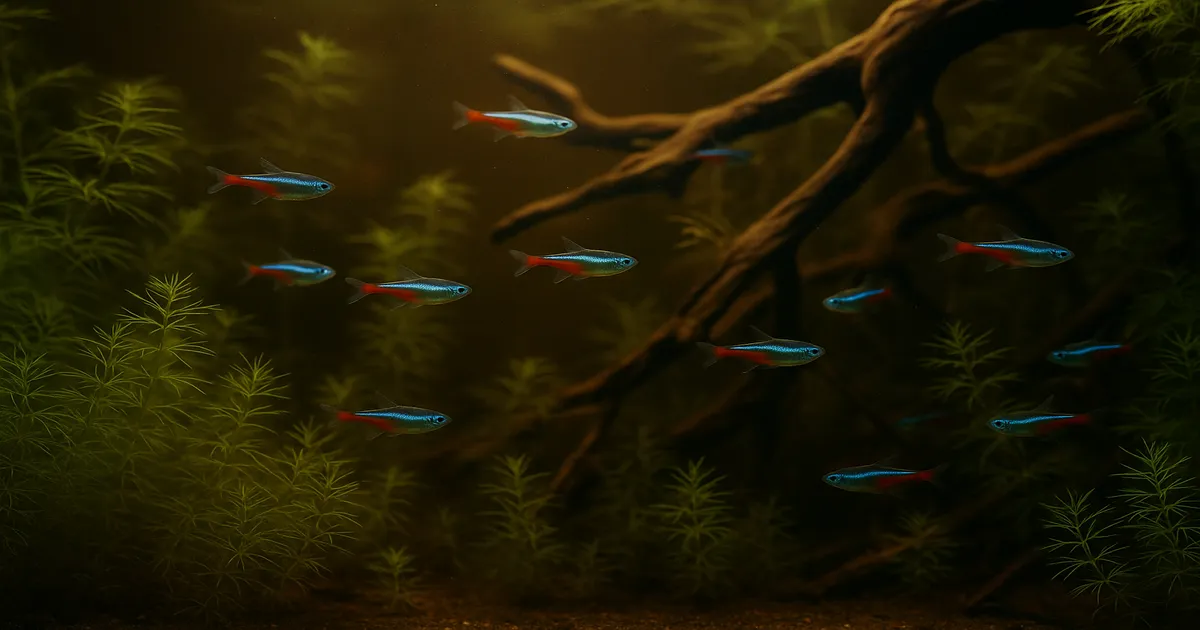
- Green neon tetras (Paracheirodon simulans) — note that regular neon tetras prefer harder water
- Pygmy corydoras (Corydoras pygmaeus, C. hastatus) — excellent soft-water bottom dwellers
- Other Boraras species — natural companions with identical needs
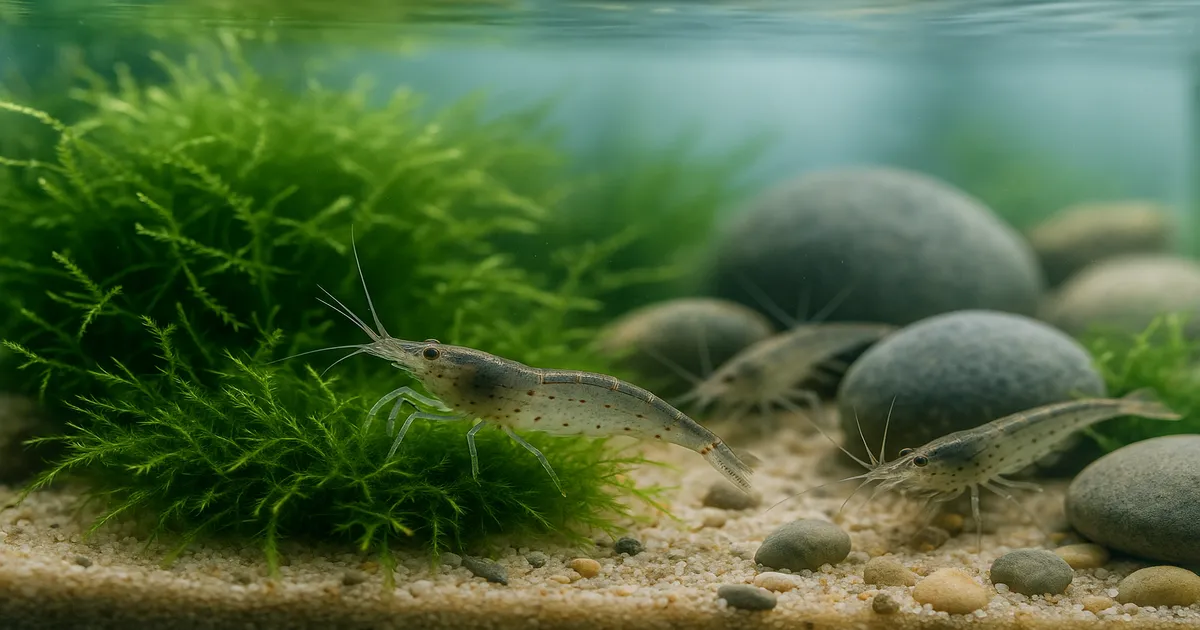
- Caridina shrimp (crystal red, bee shrimp) and Amano shrimp — ideal invertebrate tank mates; adult shrimp are completely safe, and shrimplets are rarely lost with enough plant cover
- Nerite snails — handle algae duty without reproducing in freshwater
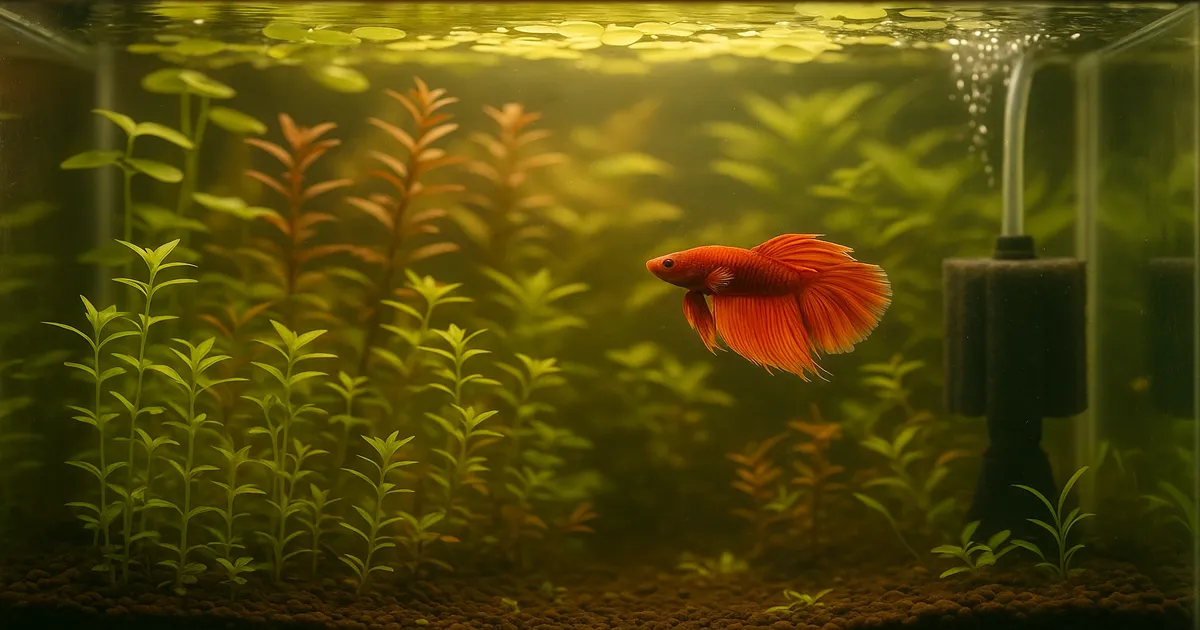
Avoid: any fish over 1.5 inches, fin nippers (tiger barbs, serpae tetras), cichlids of any kind, bettas (too unpredictable), livebearers (wrong water chemistry), and goldfish (wrong everything).
Feeding Chili Rasbora
In the wild, chili rasbora are micro-predators — they hunt copepods, insect larvae, zooplankton, and infusoria. Mouth size is the critical constraint in captivity: food must be 0.5 mm or smaller. Standard flakes and pellets are often too large.
Good options:
- Micro pellets — Hikari Micro Pellets or NorthFin Nano
- Crushed flakes — any quality tropical flake, crushed fine before feeding
- Frozen micro foods — baby brine shrimp, micro bloodworms, Daphnia, Cyclops
- Live foods — baby brine shrimp, micro worms, vinegar eels, Moina — the gold standard for color and conditioning
Feed 2–3 times daily in small amounts — only what the fish consume within 2–3 minutes. Uneaten food degrades water quality fast in a soft, low-KH tank. Rotate between dry, frozen, and live foods regularly. In community tanks, use a turkey baster to target-feed so chili rasbora aren’t outcompeted. Fasting one day per week is good for digestive health.
Common Health Issues
Chili rasbora are reasonably hardy when parameters are stable, but their tiny body mass means disease progresses fast. Early detection is everything.
Ich is the most common issue. Look for white salt-grain-sized spots, fish rubbing against objects (flashing), lethargy, and rapid breathing. Treatment:
- Raise temperature gradually to 82–84°F (28–29°C) to accelerate the parasite’s life cycle
- Treat with Ich-X or Kordon Rid-Ich Plus at half the recommended dose — chili rasbora are sensitive to medications
- Do not use salt — these are soft-water fish and salt will stress them further
Bacterial infections most often follow water quality lapses — ammonia spikes, pH swings, or temperature instability. Treat the environment first, not just the symptom.
Prevention: Quarantine all new fish and plants for 2–4 weeks. Keep nitrate below 20 ppm with regular water changes. Never add livestock directly from a store without quarantine.
Frequently Asked Questions
Can I fit 8 chili rasbora in a 16-gallon tank?
Yes, easily — 8 chili rasbora in a 16-gallon is healthy and well within the tank’s capacity. But it’s lightly stocked. A species-only 16-gallon can comfortably hold 15–20, and a larger school will look and behave dramatically better.
What is the minimum tank size for chili rasbora?
A small group of 6–8 can be kept in as little as 5 gallons, but 10 gallons is a more practical minimum for a proper school. A 16-gallon gives you room for a larger group, more stable water parameters, and the option to add tank mates.
Can chili rasbora live with shrimp?
Yes — they’re one of the best fish to pair with dwarf shrimp. Adult Caridina shrimp (crystal red, bee shrimp) and Amano shrimp are completely safe. Shrimplets may occasionally be eaten, but losses are minimal with dense planting. Nerite snails are also an excellent addition.
Why are my chili rasbora hiding and losing color?
The two most common causes are a school that’s too small (fewer than 6 fish) and water that’s too hard or too alkaline. Check your pH, GH, and KH first — if pH is above 7.0 or hardness is high, that’s almost certainly the culprit. Bright lighting and sparse planting also cause hiding. Adding more fish to the school often produces immediate improvement.
Do chili rasbora need a blackwater setup to thrive?
They don’t strictly require it, but they genuinely do better with it. Many hobbyists keep them successfully at pH 6.0–6.8 without blackwater additives. However, adding Indian almond leaves, driftwood, and a few alder cones creates conditions much closer to their natural habitat — and the improvement in color and activity is usually noticeable within weeks.