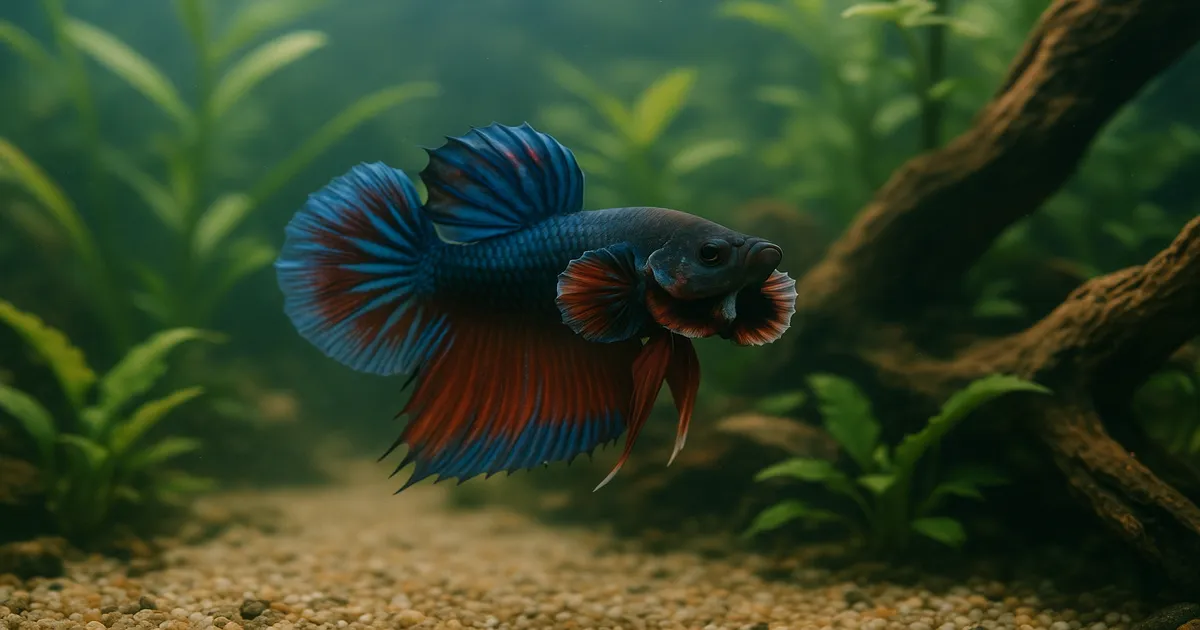
Quick Answer: Bettas most commonly flare when eating because of the labyrinth organ — the physical act of gulping air at the surface expands the throat and gill covers involuntarily. Predatory excitement and territorial instinct also fire the moment food hits the water. In the vast majority of cases, feeding-time flaring is completely normal and nothing to worry about.
Why Does My Betta Flare When He Eats? The Short Answer
When your betta sees food hit the water, several things happen almost simultaneously. His hunting instincts fire up, his territorial drive kicks in, and he may surface to gulp air — which physically pulls his gill covers open. Any one of these can cause a flare. All three at once? You get a dramatic full-body display that looks alarming but is usually just your fish being a fish.
The situation worth watching is when flaring is constant — happening all day, not just at meals — and paired with clamped fins, colour loss, or lethargy. That pattern points to chronic stress, not predatory excitement, and it warrants a closer look at your tank conditions.
What Is Flaring and Why Do Bettas Do It?
The Biology of the Gill Flare
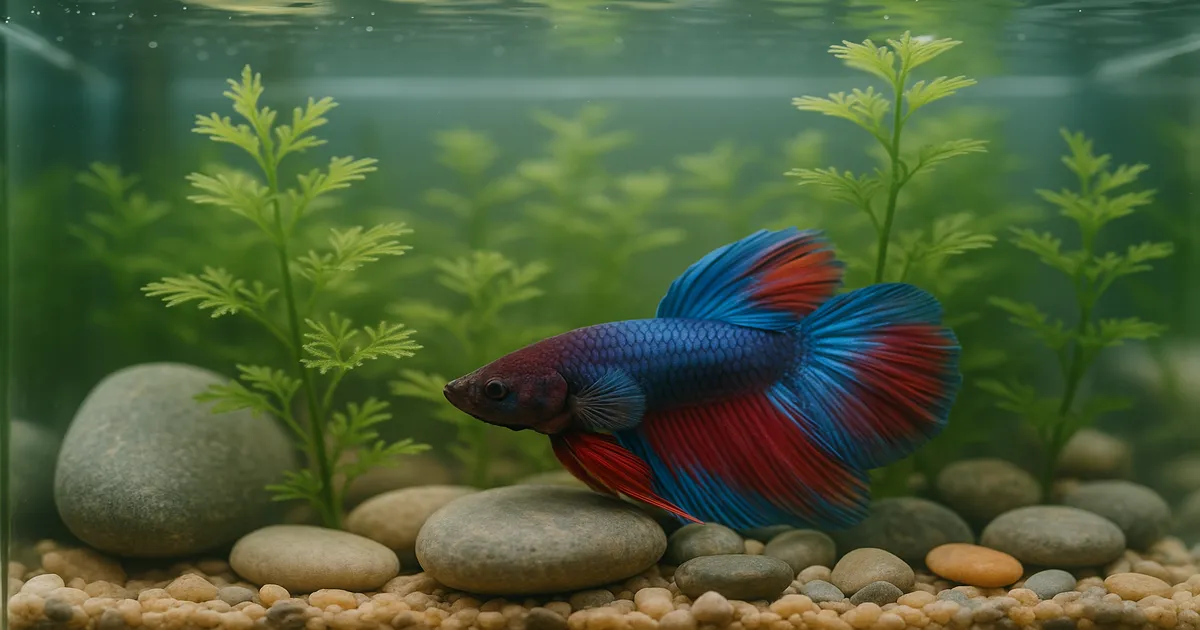
When a betta flares, his opercula — the bony gill covers on either side of his head — spread wide. His fins fan out, his body often darkens, and he makes himself look as large as possible. In the wild, this display evolved to settle disputes without physical combat. It’s energetically expensive, so a healthy betta uses it purposefully rather than constantly.
The Labyrinth Organ: The Most Overlooked Cause of Feeding-Time Flaring
Here’s the part most hobby articles miss entirely. Bettas are anabantoids, meaning they possess a labyrinth organ — a specialised chamber above the gills that lets them breathe atmospheric air directly. This adaptation evolved because their native habitat (Thai rice paddies, shallow floodplains, slow-moving ditches) is often oxygen-poor.
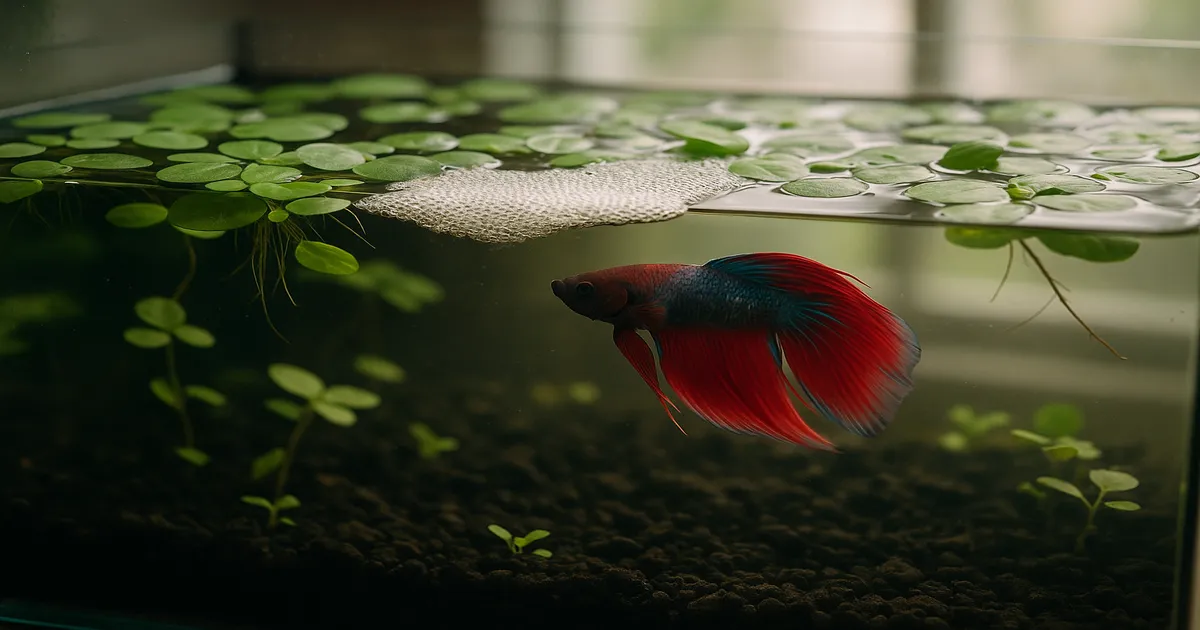
Bettas surface to gulp air constantly, including during and after eating. The mechanical act of opening the mouth wide and expanding the throat to pull in air can involuntarily trigger a partial or full gill flare. Your betta isn’t necessarily responding to a threat — he’s just breathing, and the physics of that movement happen to spread his opercula.
Flaring as a Social Signal
Beyond the mechanical explanation, flaring is deeply hardwired as a dominance display. Wild male bettas hold small, well-defined territories and respond to any perceived intrusion immediately. That instinct doesn’t disappear in captivity. Food arriving in your betta’s territory can register as an event worth asserting dominance over — even if no rival is present.
6 Reasons Your Betta Flares Specifically at Feeding Time
1. Air-Gulping via the Labyrinth Organ (Involuntary Mechanical Flare)
This is probably the most common cause and the least dramatic explanation. As your betta surfaces to grab a pellet or a piece of frozen food, the same throat-expansion that pulls in atmospheric air spreads his gill covers. It’s involuntary — like how yawning can make your eyes water. You’ll often see a brief, partial flare right at the moment he breaks the surface, followed by a quick return to normal.
2. Predatory Arousal and the Hunting Response
Food — especially anything that moves — triggers the same neurological pathway as detecting prey in the wild. Stress hormones spike, senses sharpen, and the fish enters a state of heightened arousal that expresses itself as a flare. Live foods produce the strongest response by far. A wriggling live brine shrimp or mosquito larva can send a betta into a full, sustained display before he even takes the first bite.
3. Territorial Assertion Over a Food Resource
Even with plain pellets, your betta may flare after eating as a kind of victory display. In the wild, successfully securing food in your territory is worth advertising. This post-meal flare is usually brief and followed immediately by calm, relaxed swimming.
4. Reflection Triggered by Surface Ripples
Food hitting the water creates ripples. In tanks with bare bottoms, highly reflective glass, or intense overhead lighting, those ripples can briefly distort your betta’s reflection in a way that looks like a moving rival. You can distinguish this from other causes by watching whether the flaring is directed downward or toward the glass rather than at the food itself.
5. Conditioned Excitement and Feeding Anticipation
Bettas are smarter than most people give them credit for. Many keepers notice their fish begin flaring and pacing before food even hits the water — the moment they see their owner approach the tank. This is a Pavlovian conditioned response, and it’s actually a sign of a well-stimulated, cognitively engaged fish.
6. Stress-Driven Flaring in Poorly Maintained Tanks
This is the one cause on this list that requires action. A betta living in poor water quality, a too-small tank, or strong current is in a state of chronic physiological stress. Elevated ammonia or nitrite lowers the threshold for threat-response flaring dramatically — the fish is already on edge, and food hitting the surface becomes just one more trigger. If your betta flares at everything all day long, and the flaring comes with clamped fins or faded colour, suspect the tank environment first.
Tank Setup: How Your Aquarium Affects Flaring Behaviour
Tank Size and Territory
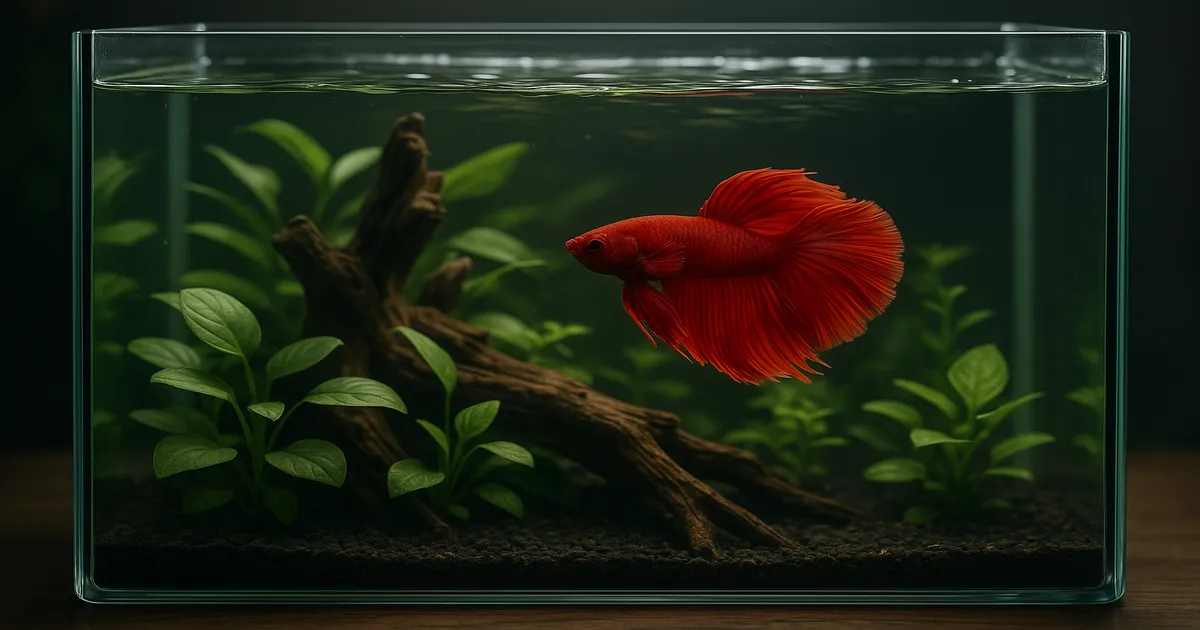
A 10-gallon tank is the recommended minimum for a single male betta; 5 gallons is the absolute floor, and anything smaller creates unstable water parameters and chronic stress. More space lets your betta establish a proper territory, which paradoxically reduces defensive flaring because there’s nothing encroaching on his boundaries.
Substrate and Reflections
Bare-bottom tanks create a mirror-like floor that generates constant reflection-based flaring. Fine aquarium sand or smooth small-grain gravel eliminates this problem while also supporting natural foraging behaviour.
Plants and Visual Breaks
Dense planting is one of the most effective ways to reduce stress-related flaring. Java fern, Anubias, and Amazon sword provide mid-level cover and break up sightlines. Floating plants like frogbit and dwarf water lettuce are especially valuable — they cover the surface where bettas spend most of their time feeding and air-gulping, diffuse overhead light, and cut reflection triggers dramatically. Add a cave or betta log as a retreat, and you’ll have a fish that flares contextually rather than reactively.
Filtration and Flow
Bettas evolved in still or barely moving water. A powerful filter that creates strong current forces your fish to swim against the flow constantly — exhausting and stressful, and a stressed betta flares more readily at everything, including his food. A sponge filter is ideal for most betta setups. If you prefer a hang-on-back filter, add a spray bar or baffle to reduce the output to a gentle surface ripple.
Water Parameters and Betta Reactivity
Ideal Parameters for a Calm, Healthy Betta
| Parameter | Acceptable Range | Ideal Range |
|---|---|---|
| pH | 6.5–7.5 | 6.8–7.2 |
| Temperature | 76–82°F (24–28°C) | 78–80°F (25.5–26.5°C) |
| GH | 3–15 dGH | 5–10 dGH |
| KH | 3–8 dKH | 4–6 dKH |
| Ammonia | 0 ppm | 0 ppm |
| Nitrite | 0 ppm | 0 ppm |
| Nitrate | below 40 ppm | below 20 ppm |
Test your water regularly with a reliable liquid test kit.
Temperature matters more than most beginners realise. Below 74°F (23°C), bettas become sluggish and physiologically stressed, which can increase reactive flaring as the immune system struggles. Above 84°F (29°C), metabolism accelerates and aggression ramps up noticeably. The sweet spot of 78–80°F keeps your betta calm, healthy, and predictable. A reliable adjustable heater is essential — not optional.
Elevated ammonia or nitrite is one of the most common hidden causes of excessive flaring. These compounds keep your betta in a permanent state of physiological alarm. If his flaring seems out of proportion to the situation, test your water before assuming a behavioural problem.
Feeding Practices That Affect Flaring Intensity
What Bettas Eat in the Wild
Wild Betta splendens are carnivores and insectivores. They patrol their territories and strike at mosquito larvae, small aquatic invertebrates, zooplankton, and terrestrial insects that fall onto the surface. Everything about their feeding behaviour is active, opportunistic, and hunting-oriented. That’s the context behind feeding-time flaring — your betta isn’t malfunctioning, he’s hunting.
Best Foods for Bettas
Staple:
- High-quality betta pellets with whole fish or shrimp meal as the first ingredient (not wheat or corn)
Excellent supplements:
- Frozen mysis shrimp — nutritionally superior, great as a regular frozen food
- Frozen brine shrimp — good protein, excellent for conditioning
- Frozen daphnia — natural digestive aid, helps prevent constipation
- Frozen bloodworms — highly palatable treat; rotate in, don’t use as a staple
Most likely to trigger intense flaring:
- Live brine shrimp, live daphnia, live mosquito larvae, live blackworms — movement flips the hunting switch like nothing else
Acceptable occasionally:
- Freeze-dried foods — always pre-soak to prevent bloat; nutritional value is lower than frozen equivalents
Avoid entirely:
- Flake food — poor nutritional profile for a carnivore, high plant filler content, causes bloat
- Feeder fish (goldfish, rosy reds) — disease vectors with inappropriate fat profiles
- Human food — bread, crackers, anything from your kitchen
Feeding Frequency and Portion Size
Feed adults once or twice daily. A betta’s stomach is roughly the size of its eye — that’s your portion guide. In practice, 2–4 appropriately sized pellets per feeding, or an amount of frozen food your fish can finish in 2–3 minutes, is plenty. One fasting day per week helps prevent constipation, obesity, and swim bladder issues, all of which are common in overfed bettas.
When Betta Flaring at Feeding Time Is a Problem
Normal vs. Stress Flaring: How to Tell the Difference
Normal feeding-time flaring is brief, contextual, and followed quickly by calm behaviour. Your betta flares, eats, and goes back to exploring his tank. Stress flaring looks different: it’s near-constant, happens throughout the day regardless of feeding, and comes with other symptoms — clamped fins, faded or darkened colour, lethargy, or erratic swimming.
Health Issues That Can Worsen Excessive Flaring
If you’ve ruled out water quality and tank setup, look for accompanying physical symptoms. Disease-related flaring is never flaring alone — there will always be other signs.
- Fin rot — ragged, receding fin edges, often with black or white margins; almost always caused by poor water quality. Improve conditions first, then treat with aquarium salt or antibiotics if needed.
- Ich — white salt-grain-like spots on body and fins, flashing against objects. Raise temperature gradually to 82–86°F (28–30°C) and treat with a dedicated medication.
- Velvet — fine gold or rust-coloured dust on the body, best seen with a flashlight held at an angle. Darken the tank and treat with a copper-based medication.
- Swim bladder disorder — floating at the surface, sinking, or swimming sideways; almost always linked to overfeeding. Fast for 2–3 days, then try feeding daphnia to get things moving.
Tank Mates and Feeding-Time Flaring
Even peaceful tank mates can escalate feeding-time flaring simply by being near the surface when food arrives. Your betta interprets any movement near his food as competition. The solution isn’t necessarily removing tank mates — it’s choosing species that don’t compete at the surface.
Good choices:
- Corydoras catfish — bottom dwellers that clean up sinking food; zero surface competition
- Kuhli loaches — shy, bottom-oriented, essentially invisible to your betta
- Otocinclus catfish — algae eaters that stay on glass and plants
- Ember tetras or harlequin rasboras — fast mid-water swimmers that stay out of your betta’s way
- Nerite or mystery snails — occasional brief flares at snail movement, but harmless
Avoid:
- Tiger barbs and serpae tetras — notorious fin nippers
- Guppies with flowing fins — their fins mimic a rival male; bettas frequently attack them
- Any bright, iridescent fish — colour triggers aggression as reliably as fin shape
- Other male bettas — one male per tank, no exceptions
Frequently Asked Questions About Betta Flaring When Eating
Is it normal for a betta to flare when eating?
Yes, completely normal. The most common causes — labyrinth organ air-gulping, predatory excitement, and territorial instinct — are all natural betta behaviours that happen to coincide with feeding time. As long as your fish returns to calm behaviour after eating and shows no other symptoms, there’s nothing to worry about.
Why does my betta flare and then go back to normal after eating?
That pattern is the textbook definition of healthy feeding-time flaring. Predatory arousal and territorial instincts spike when food arrives, produce a display, and then subside once the stimulus is gone. Think of it as his hunting mode switching on and off — exactly as it should.
Does flaring hurt my betta?
Occasional, contextual flaring is harmless and natural. The concern is excessive flaring — if a betta flares constantly throughout the day due to chronic stress or persistent reflection triggers, the energy expenditure becomes taxing over time. Brief feeding-time flares are nothing to worry about.
How do I stop my betta from flaring excessively at feeding time?
First, distinguish excessive from normal. If flaring is brief and contextual, you don’t need to stop it. If it’s prolonged or constant, check your water parameters (especially ammonia and nitrite), evaluate your tank size and filter flow, and add floating plants to reduce surface reflections. Switching from live food to high-quality pellets will also reduce the intensity of the predatory response at mealtimes.
Why does my betta flare at his food before eating it?
He’s responding to the movement of the food, particularly with frozen or live prey. Moving food triggers the same neurological pathway as detecting live prey — his hunting instincts fire before he even takes a bite. It can also be a conditioned anticipation response if he’s learned to associate the food dropping with feeding time.